
What Is a Wagon? We Measured 154 of Them to Find Out
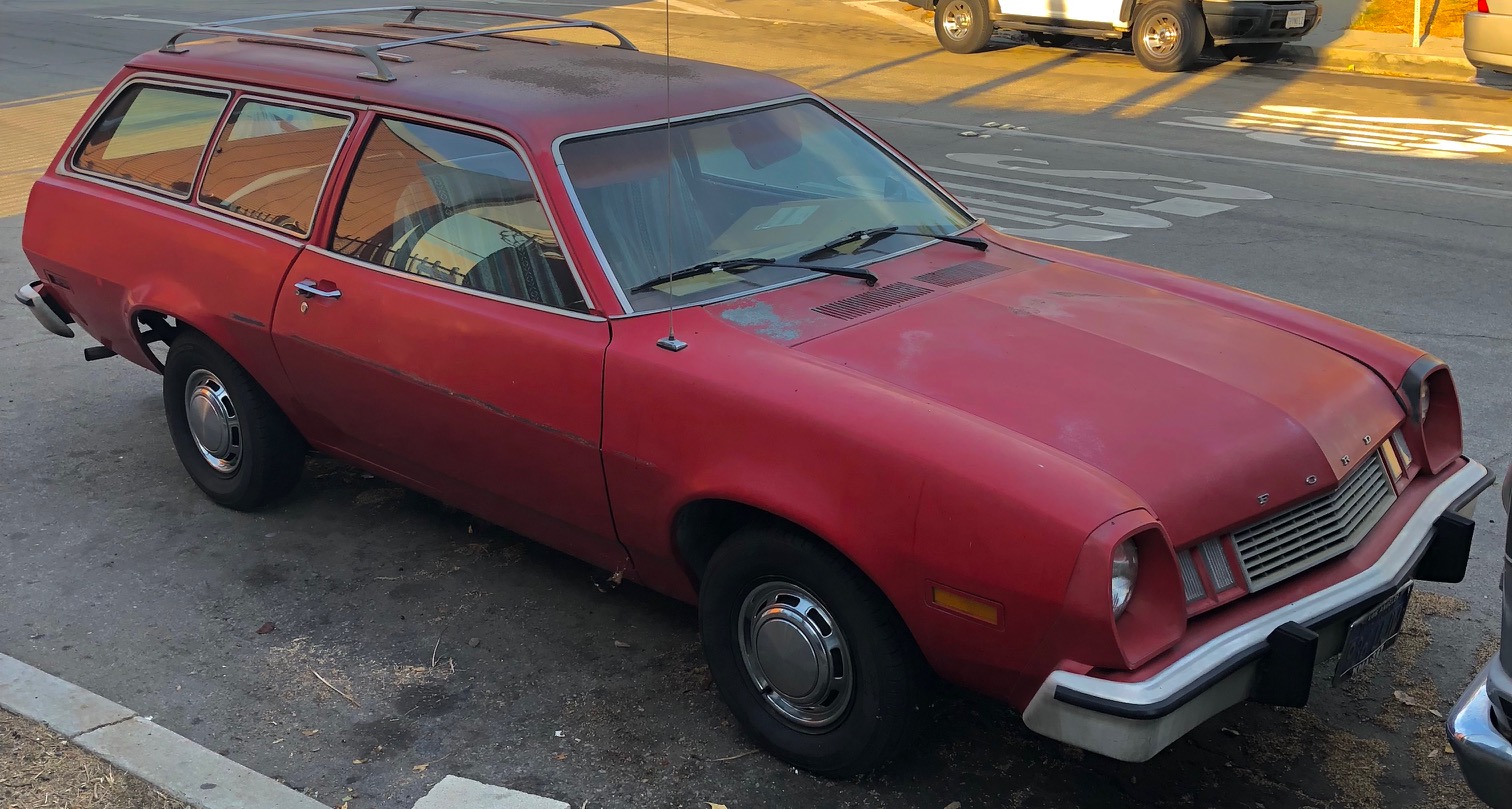
My first wagon experience was a Ford Pinto.
I was little enough to ride in the way back — that flat cargo deck behind the rear seats, facing out the tailgate glass, watching the road unspool backwards. No seat, no belt, no chance that happens today. It was the best seat in the car.
I didn’t know the word “wagon” then. I just knew our car had a room in the back, and other cars didn’t.
Decades later I’ve owned a BMW Z3 M Coupe, an Audi S4 Avant with the 4.2 V8, and an A4 Avant. Different cars, different eras, same idea every time: the roof keeps going.
Hold onto the Pinto. It comes back at the end, and it does something I didn’t see coming.
The Problem
Everyone says they want a wagon. Almost nobody can tell you what one actually is. Ask around and you’ll get “isn’t that just an SUV?” or “you mean a hatchback?” — no, and no.
A wagon is one of those things you know when you see it. But “you know it when you see it” only works after someone has trained your eye.
So let’s train yours. Not with vibes — with a tape measure.
The One-Sentence Answer
A wagon takes a normal car and stretches its roof all the way to the back, over a real cargo area, ending in a tailgate. Same low car underneath — same platform, same ride height, same way of driving — just with the roofline carried straight back instead of chopped off behind the rear seats.
The room of a small SUV. The soul of the sedan it’s based on.
Hold that image: roof carried back, car underneath, sits low.
Now Here’s the Number That Settles It
We measured all 154 wagons in the Wagon Wiki. The median one stands 57.6 inches tall.
That’s the definition, expressed as a number. A wagon is roughly four foot ten — about the height of a sedan, because it is a sedan with the roof carried back.
The spread is tight, too. 136 of our 154 wagons — 88% — are under 60 inches. This isn’t a fuzzy category. It’s one of the tightest in the car world.
My own cars land right in the middle of it. The S4 Avant and the A4 Avant are both 56.2 inches tall. I didn’t plan that. I just kept buying the same shape.
For scale: the median wagon here is 187 inches long, holds 34 cubic feet behind the seats, and returns 21 mpg combined. Long, low, and it swallows your life.
Wagon vs. Crossover: The One That Matters
Here’s where the whole world gets it wrong. People call wagons “SUVs” because both are long and hold a lot. But the difference isn’t size — it’s how high it sits and what it’s built on.
Take a wagon. Jack it up four inches. Bolt on some black plastic cladding and a taller seat. The industry stops calling it a wagon and starts calling it a crossover — and charges you more for it.
That’s the entire SUV boom, in one sentence: take a wagon, raise it, raise the price.
Which gives you the fastest eye test there is: do you look down into it, or up at it?
Down = wagon. Up = crossover.
Same cargo. Completely different car. And this is the part that actually matters to me: the low one doesn’t feel cumbersome. You get the utility, the space, the room in the back — without the tall, top-heavy, leaning-through-a-bend feeling of a high-riding SUV. You never have to apologise for the shape. That’s the whole trade, and the wagon is the only body style that refuses to make it.
We’ll Be Honest: Our Own Database Argues Against Us
Here’s the part most sites would quietly leave out.
Sort our 154 wagons by height. Look at the tallest eight. Every single one is a Subaru.
| Height | |
|---|---|
| Subaru Forester (Gen 5) | 68.1 in |
| Subaru Outback (Gen 7) | 68.0 in |
| Subaru Forester (Gen 4) | 67.7 in |
| Subaru Forester (Gen 6) | 67.5 in |
| Subaru Forester (Gen 3) | 66.7 in |
| Subaru Outback (Gen 4) | 66.4 in |
| Subaru Outback (Gen 5) | 66.1 in |
| Subaru Outback (Gen 6) | 66.1 in |
That’s more than ten inches taller than the median wagon.
The first Outback started life as a lifted Legacy wagon — a wagon in every meaningful way. Seven generations later it’s 68 inches tall and you climb up into it. By our own test, the modern Outback and Forester have crossed the line. They’re crossovers that kept a wagon’s name.
We keep them in the database anyway, because that’s the honest history. The Outback is the exact car that shows you how the wagon became the crossover. It didn’t happen overnight. It happened an inch at a time, over thirty years, while nobody was measuring.
Now somebody is.
Wagon vs. Hatchback
Closest cousins, most-mixed-up pair. A hatchback has a tailgate too — but its roof and cargo area stop short, leaving a stubby little tail. A wagon keeps going: longer roof, longer load floor, a proper cargo hold instead of a cubby.
The eye test: short tail, and it’s a hatch. Long roof carried all the way to the bumper, and it’s a wagon. The middle gets fuzzy, and car people have argued about it happily for decades. Let them.
Wagon vs. Shooting Brake
The fancy cousin — and the one people get most confidently wrong.
A shooting brake is two doors and a hatch. That’s the rule. The roof still carries all the way back over a real cargo area — it’s still a long roof — it just does it with two doors instead of four. A shooting brake isn’t the opposite of a wagon. It’s a sub-species of one.
The BMW Z3 M Coupe is the archetype, and I’ll declare my interest: I owned one. Two doors, a hatch, 240 horsepower, and — at 50.6 inches — the lowest thing I’ve ever owned. It looks like a running shoe, people either love it or find it genuinely upsetting, and it is the purest expression of this whole idea. A sports car that decided it wanted a cargo hold.
Four-door cars marketed as “shooting brakes” — the Mercedes CLA and CLS Shooting Brake, the Porsche Panamera Sport Turismo — are wagons. Beautiful ones. But wagons. The marketing department doesn’t get a vote.
And Then the Rule Turned Around and Bit Me
I built this whole site on the idea that the category should be measured, not felt. Doors. Inches. A tailgate or not.
So while I was writing this, I went and checked the car that started it. The Ford Pinto Wagon. The one I rode backwards in.
It has two doors and a tailgate.
Ford only ever built the Pinto wagon as a two-door. Which means that by my own rule — the one I just spent two thousand words defending — my first wagon was not a wagon. It was a shooting brake.
The humblest shooting brake ever built. An economy car with a 2.0-litre four, a plastic dashboard, and roughly none of the glamour of a Ferrari FF. And it qualifies, because the rule doesn’t have a clause about glamour.
I could have quietly dropped it. Added a line saying shooting brakes have to be sporting, or coupe-based, or cool — and the Pinto would have vanished, and nobody would ever have known.
But that’s exactly the move the industry pulls when it calls a four-door hatchback a shooting brake because it looks expensive. The second the definition starts depending on whether I like the car, it stops being a definition and starts being a preference.
So the Pinto stays. It’s in the Shooting Brake Wiki, parked next to the Ferrari and the Aston Martin, and it earned its place the same way they did: two doors, one tailgate, roof all the way back.
A rule you’re willing to enforce against your own childhood is the only kind worth having.
Now You Can Spot One
Roof carried all the way back, over real cargo space, on a low car you step down into. Around 57 inches tall. Four doors. Drives like a car, because it is one.
Raise it four inches and it’s a crossover. Chop the tail and it’s a hatchback. Take two doors away and it’s a shooting brake — still a long roof, just a rarer one.
Everything else is a wagon wearing a costume. Now you’ll know the real thing across a car park — even if it turns out to be a Pinto.
Everything We’ve Measured
This article is built on data we collected ourselves. All of it is public, all of it is free, and all of it is on this site.
The Wagon Wiki → — every wagon sold in the US since 1990, plus the imports that matter. 154 cars, 29 makes. Horsepower, torque, weight, height, cargo, MPG, drivetrain, engine, 0–60, launch MSRP. Filter it, choose your own columns, and put any two cars side by side.
The Shooting Brake Wiki → — the two-door long roofs. The Z3 M Coupe, the Ferrari FF, the Lynx Eventer, the Aston Zagato — and the Ford Pinto, which earned its place the hard way.
Classic Wagons → — the pre-1990 long roofs. Woodgrain, way-backs and rear-facing third rows, from when the wagon was simply what a family car looked like.
And because one good database is worth more than a hundred listicles, we cut it every way we could think of:
Fast Wagons: 400+ HP · Forbidden Fruit: The Ones America Never Got · Rear-Wheel-Drive Wagons · All-Wheel-Drive Wagons · Turbocharged Wagons · The Biggest Cargo Holds · Manual Wagons · V8 Wagons · Wagon vs SUV: We Ran the Numbers
Anywhere you see a ~, that figure is approximate and still being checked against a primary source. We’d rather tell you that than pretend.
If you want the long roofs in your feed instead, we’re on Instagram and Facebook.